

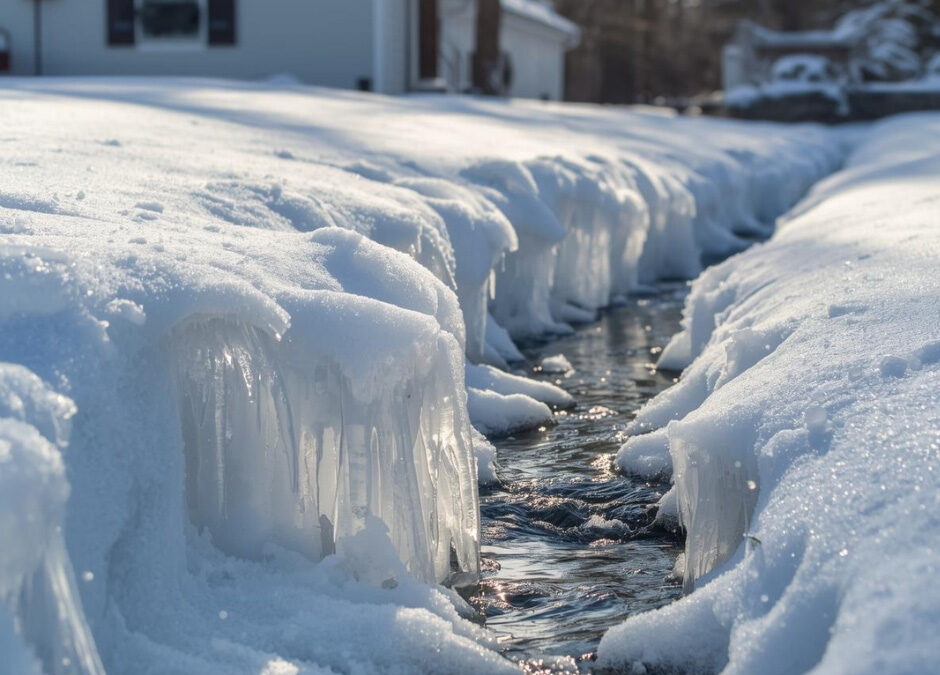
As temperatures rise in February, melting snow and ice can create water problems for homeowners. The winter thaw may seem harmless, but it often reveals leaks, drainage issues, and other vulnerabilities that can lead to significant water damage.
Basements are particularly susceptible. Melting snow can saturate the ground, increasing hydrostatic pressure around the foundation. Water enters through cracks, window wells, or gaps near utility lines. If sump pumps fail or become overwhelmed, flooding can occur in minutes.
To reduce risk, ensure gutters and downspouts are clear and directing water far from your home. Check for pooling water around the foundation—this is often a sign that grading needs adjustment. Inside, inspect walls for damp areas, musty odors, or peeling paint.
Pipes can also be at risk during thaw cycles. When temperatures rise and fall quickly, pipes may expand and contract, increasing the likelihood of cracks. Keep your home consistently heated and insulate exposed plumbing.
Winter thaw issues are common, but early awareness and proactive maintenance can protect your home and minimize insurance claims.